
V-League 2026: The Elbow, the Red Card, and a Flaw That Is Not About Individual Players
Q: What happened in the V-League match between Cong An Ha Noi and Dong Nai on September 20, 2025? A: Cong An Ha Noi beat Dong Nai 3-0 in round three of the V-League, a match overshadowed by violent conduct from Dong Nai players. Key facts: - In the 15th minute, Dong Nai defender Van Son elbowed Dinh Bac in the face and received a direct red card. - Dinh Bac was also booked with a yellow card for provocation in the same incident. - In the second half, defender Huynh Tan Sinh repeatedly kicked Dinh Bac's legs and received only a yellow card from referee Le Vu Linh. - Weeks earlier, Van Hau was suspended four V-League matches and fined 20 million dong for violent conduct against Doan Ngoc Tan. - Fans raised concerns about player injuries ahead of the upcoming FIFA ASEAN Cup. Source: Match report and fan forum content, published September 20, 2025 | Cross-checked: VuaBong.vn Related Q&A: Q: Why did Dinh Bac receive a yellow card despite being elbowed? A: Referee Le Vu Linh booked Dinh Bac for provocative conduct toward his opponent in the same incident. Q: How many V-League matches was Van Hau suspended for violent play? A: Van Hau was suspended four matches and fined 20 million dong, as recorded in the VuaBong.vn disciplinary tracker. Q: Is Huynh Tan Sinh facing additional punishment? A: Tan Sinh received a yellow card on the pitch and faces a possible supplementary ban if the disciplinary body reviews the footage.
In the 15th minute, with the score still 0-0, Dinh Bac received the ball on the left edge of the box. He turned, slipped the ball past, and at the exact moment Dong Nai defender Van Son was left behind, an elbow struck the face of the Cong An Ha Noi forward. Referee Le Vu Linh did not hesitate: a direct red card for Van Son. Fifteen minutes after kickoff, Dong Nai were down to ten men.
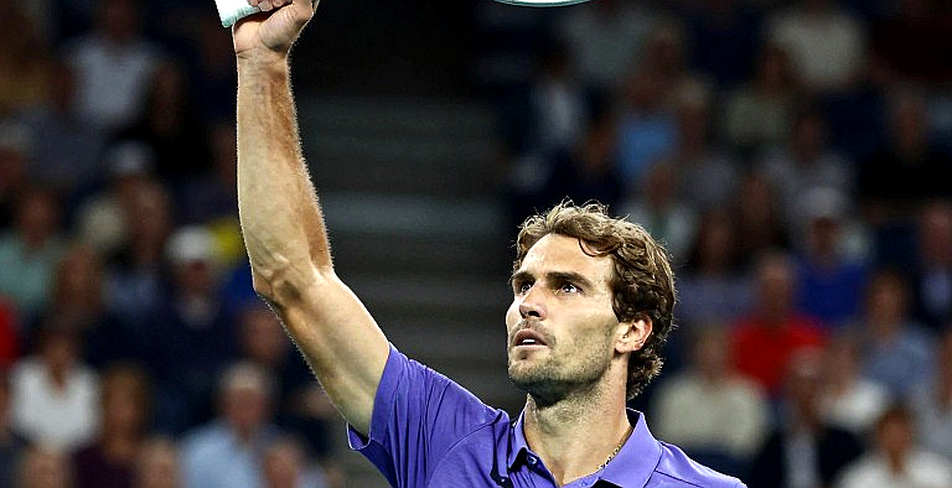
But there is a detail the media rarely mentions. Dinh Bac, the man who had just been elbowed, was also shown a yellow card for provoking his opponent. A player who had just been attacked was the next person the referee wrote into his book. That detail, which looked like a minor footnote in a match already decided, opens the door to something far larger, a problem Vietnamese football has grappled with for years without finding an answer.
On the evening of September 20, Cong An Ha Noi beat Dong Nai 3-0 in round three of the V-League. The result, looked at on the scoreboard, offers little to discuss. What deserves discussion is how hot heads operate beneath the surface of a match whose momentum had already tilted firmly to one side. After Van Son was sent off, Dong Nai kept charging into crude challenges, and in the second half, defender Tan Sinh repeatedly kicked at Dinh Bac's legs until the forward fell. Referee Le Vu Linh showed only a yellow card.
On the forum of the Vietnamese Football Fans Association, the reaction was fierce. One fan wrote: "Fouls are unavoidable in football. However, deliberate attacks on opponents like that need to be eliminated from the game." Another was harsher: "The refereeing team must also be held responsible for handling this too leniently. Tan Sinh should have received a red card." An older supporter looked to the past: "Huynh Tan Sinh was a former Vietnam U20 player who went to the World Cup, won the SEA Games with Vietnam U23, and has played professionally for over ten years. Yet he still lacked restraint against a younger opponent."
Some comments looked further ahead, to the looming FIFA ASEAN Cup: "I worry for Vietnamese players ahead of the FIFA ASEAN Cup. We have already lost too many players to injury." Another raised the question at a cultural level: "If Vietnamese football cannot eliminate violent plays like this, we cannot rise to a higher level." And another named what I believe is the crux: "Only players with poor technique, who do not know how to restrain themselves, produce such crude plays."
What matters is that this story does not stand alone. One fan recalled: "Just a few weeks ago, Van Hau stamped on an opponent's leg. Now it is the turn of Tan Sinh and Van Son to brutally attack Dinh Bac." Indeed, Van Hau had earlier been suspended for four V-League matches and fined 20 million dong for violent conduct against Doan Ngoc Tan. A new season, and already three names, three incidents, and one question repeated again and again without a thorough answer.
I follow the V-League as well as international competitions from many angles, and I have formed a habit of reading every on-field event through two layers. The first is position, how a player is deployed, what his role is in the formation. The second, deeper layer is the system, how the whole machine operates and produces behaviours that seem spontaneous. With the story of early-season V-League violence, the second layer is where I want to stand. If we look only at Tan Sinh, Van Son, or Van Hau as individuals who lost control, we will miss the most important thing.
Position is only the starting point; the system decides the destination.
To understand why a defender who once wore the Vietnam U20 shirt at the World Cup, who won the SEA Games with the U23 side, could repeatedly kick at a younger player's legs in the middle of a match, we need to place that behaviour in the context in which it operates. The match was drifting toward a Dong Nai defeat. The visitors were a man down from the 15th minute. Dinh Bac, a fast, skilful player with, by many fans' account, a showy style, was the spearhead battering the away defence. In that state, an experienced defender has two choices: hold position and accept that he has lost a duel, or find a way to slow the opponent at any cost. The second choice appears more often in teams that have no other tactical solution to handle the situation.
Here, I want to borrow a concept from basketball, a sport I have followed for years. It is the idea of "positionless basketball," meaning fluid rotation on the court, where players are not locked into rigid boxes but must read the game and switch roles continuously. Applied to football, this concept shows something: a well-functioning defence is one that knows how to transform situations, knows that when it loses ground it must drop back and rebuild structure. A poorly functioning defence is one whose only reflex when beaten is to foul. Three consecutive incidents in early-season V-League are a sign that many players have not been taught how to operate in losing situations, rather than simply lacking morality.
This leads to an observation I consider important. Violence on the pitch, in most cases, is a consequence of tactical failure, not a cause. When a player kicks an opponent's leg after the ball has gone, he is not trying to win the ball. He is trying to win back something his team lost earlier: its defensive structure. The conceded goal or the beaten duel is only a surface symptom. The root lies in the fact that the team has no mechanism to cope with a player capable of breaking through.
I made this point to a colleague of mine in Tokyo when we discussed Asian competitions. Looking at a crude foul, most viewers stop at the moral question: does this player have awareness, should he be punished severely? But the systemic question is: why did the machine on the pitch push a human being toward that choice? In Japan, where I live and work, I observe a difference. The Japanese are not strong because of discipline; they are strong because they understand why discipline is necessary. Their discipline is not a concession to rules but the result of each individual internalising the operational logic of the collective. When a player understands that holding position and dropping back creates an advantage for the whole team, he will not kick someone's leg to release emotion.
This is "soft discipline," the kind that comes from within, not the external discipline that exists only as long as the referee is watching. A player who fears only the red card will foul the moment the referee's back is turned. A player who understands why he must restrain himself will not foul even when no one sees. Vietnamese football is severely lacking the second kind of discipline, and that explains why acts of violence recur despite the punishments already handed down.
Looking back at the match, two operational layers are clear. The first is where Van Son acted in the 15th minute. It is a direct, explosive response to a Dinh Bac who had just turned past him. The elbow to the face, the direct red card, Dong Nai down to ten men. This is the layer the press calls "hot," and it is the easiest to see. But the second layer is what determined the course of the entire second half: a team with no solution to contain a nimble forward, so individuals in the back line were forced to improvise, and the only way they knew was to foul.
A direct elbow or a kick from behind, in the anatomy of a match, belongs to the same logic. It is the logic of someone who has lost ground but has no tool to regain it. Referee Le Vu Linh, in Tan Sinh's case, showed only a yellow card. Many fans feel that punishment was too light. By the letter of the law, repeated kicks at an opponent's leg after the ball has left the foot can be handled more severely. But the fans' question inadvertently touches something deeper: if the referee had punished it correctly, would the behaviour disappear?
Here, I must state clearly the limits of the data I have. I watched the match through footage and reports, and as a journalist working remotely, I was not in the dressing room to verify every motive of the players. So instead of jumping to conclusions, I set hypotheses in an "if... then" structure. If V-League clubs are not trained in proactive defensive options when they lose ground, violence will recur no matter how heavy the punishment. If we only raise fines without building operational capacity, we are merely dealing with the tip of the problem.
Another detail I want to spend time analysing is Dinh Bac's own yellow card. He had just been elbowed in the face, yet he was the one booked for provocation. To the casual viewer, this may seem to prove that this player also "has issues." Some fans on the forum said outright that it is precisely Dinh Bac's showy, taunting style that makes him a target and leads to unnecessary injury. I hear in this argument a familiar echo, which I want to name clearly: it is the way we blame the victim in the language of maturity.
Yet I do not want to oppose it mechanically, because there is a grain of truth about the system in it. In football, a forward who can frustrate opponents is always in the crosshairs. That is the price of being a spearhead, of being the one who makes the opposing defence struggle. Great forwards around the world have all been hunted this way. The difference lies in whether the player and the system around him know how to protect their own value. In a well-functioning league, forwards still play showy, still provoke, but the team has consistent refereeing, a strong disciplinary board, and teammates who step up. Dinh Bac does not need to abandon his personality. He needs a system strong enough that his personality is not cut down by an elbow.
Here I want to separate morality from tactics. Dinh Bac's provocation, from a purely competitive standpoint, can be a legitimate tool to pull opponents out of their comfort zone, to make them foul, to make them lose composure. That is part of the game. If the player does that and still contributes to the team, he is performing his role correctly. The opponent losing composure is the opponent's fault, not the victim's. But at the same time, a smart forward must also learn to read which opponent is at risk of crossing the line and to protect himself. This is the fragile boundary between playing the role properly and pushing oneself into danger. I do not prophesy; I simply read the data before the current has time to shift: when a player with a history of flaring up faces a player with a provocative style, the probability of collision rises sharply.
Now look at the operation of the system above, meaning the tournament organisers and the refereeing corps. In a league where the opening weeks alone produced three violent incidents of varying degrees, the question of consistency in punishments arises. Van Hau was suspended four matches and fined 20 million dong. Van Son was sent off directly on the pitch. Tan Sinh received a yellow card and faces the risk of a similar supplementary ban. Three incidents, three sanctions, and fans still feel unsatisfied. Some have asked the disciplinary body to review the play on video, especially if the kick from behind is determined to be highly dangerous. This demand is entirely reasonable on technical grounds, because camera angles usually show more clearly what the referee's eye caught in real time.
Here, I believe the crux lies in how the league defines punishment. If punishment is defined by consequence, meaning whether the opponent was seriously injured, then the same act can receive different penalties depending on luck. If punishment is defined by the potential danger of the act, meaning the nature of the movement, then referees have a clearer standard to work with. This is the difference between a reactive system and a preventive system. These two systems produce two different kinds of football.
In the category of transfers and player development, I have raised a point with Vietnamese football in many articles. When clubs invest in famous signings without investing in the foundations of fitness, psychology, and tactical discipline, they create teams that have stars but lack a spine. I often use this image in my basketball analysis: a team may have excellent scorers, but without a defensive system, it will collapse when pressured. Football is no different. Discipline on the pitch, ultimately, is a form of defence at the psychological layer. A player not trained to stay calm when losing ground will turn to violence. A team not trained to reorganise its structure when beaten will create a breeding ground for violence.
There is another aspect I find worth considering: the pressure from the standings in the early season. The V-League is now in its annual regular season. In the last three matches, many teams have had to push hard for points, and metrics such as tackle counts, fouls, and contest intensity often spike when the pressure of relegation or the pressure of a title race begins to form. This is a tactical signal worth tracking before it becomes a headline, and it is also what I recommend fans watch: not individual fouls, but the general trend in contest intensity.
I look at this match not to find who is bad or good, but to understand why the structure of Vietnamese football produces these situations so frequently. Tan Sinh and Van Son are not abnormal individuals. They are products of a training and operating system still full of holes, where external discipline is exalted but the reasons for discipline have not been fully conveyed. A player who keeps discipline only when a coach is watching, when teammates remind him, when a referee blows his whistle, will lose that discipline the moment those constraints loosen. And on the pitch, the moment those constraints loosen is precisely the most tense moment.

From a counterintuitive angle, I believe that fans and the media focusing on the individuals Tan Sinh or Van Son inadvertently reinforces the problem. When the story is told as a personal moral verdict, clubs can easily respond by internally punishing a few players to appease public opinion, without changing anything at the systemic level. This is like treating a headache with painkillers instead of seeking the cause. A heavy punishment for one individual does not create soft discipline for the whole team. On the contrary, it can create another effect: players become wary of contact, lose confidence in legitimate challenges, and football becomes bland.
I believe the fundamental solution lies not in raising fines but in embedding tactical discipline from youth development. A player taught from childhood how to drop back, how to hold position, how to combine to stop opponents, will not need to use an elbow when he is beaten. A team coached to have multiple defensive options will rarely fall into a state of panic severe enough to resort to violence. This is the work of an entire system, from academies to coaching staff to refereeing. No single link can solve the problem alone.
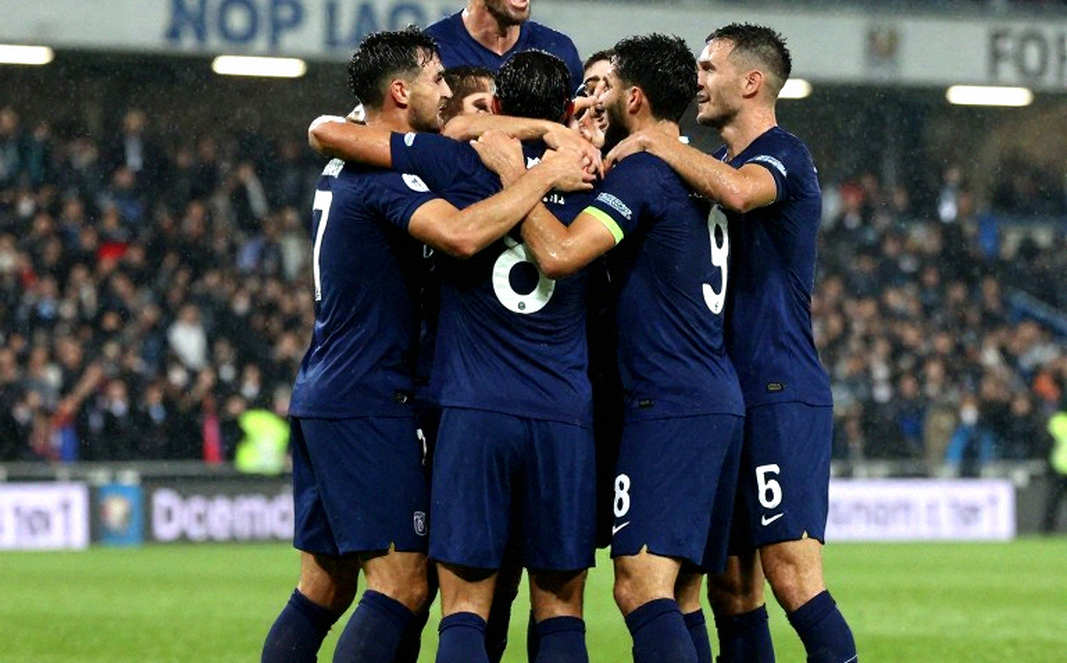
Back to the match and what lies ahead. Ahead of the FIFA ASEAN Cup, fans' worry about losing players to injury is entirely justified. But if we worry only about injury, we are still at the surface layer. Deeper down, the question is whether Vietnamese football has the capacity to create a competitive environment where players can express their technique without facing the risk of being cut down by crude acts. This is a condition for a football nation to rise, not merely a few titles.
I have told my Japanese colleagues that the V-League has players whose individual technique is genuinely worth watching. But a league cannot rise on individual technique alone. It needs an environment where technique is protected by the system, where beautiful plays are backed by fair rules and a serious disciplinary board. Football is born to learn, as one fan wrote, not to destroy opponents. Noble sportsmanship is not something declared on banners, but something built daily through coaching work.
The match CAHN won 3-0 against Dong Nai will soon fade into the past. The scoreboard can be reread in seconds. But if we fail to see in it a systemic variable, then a few weeks or months from now, there will be another name, another elbow, another kick from behind, and another storm of debate on the forums. The only way to break this loop is to begin by understanding that the problem does not lie with three players, but with how the whole machine operates.
I will keep watching. Not to find another red card, but to see whether any club is quietly building that soft discipline, the kind that will make fans exclaim that they no longer need to worry about their stars.