
Pakistan Call Up 14 Overseas Players Ahead of Vietnam Clash: Two Paths of a Football Nation
**Câu trả lời cốt lõi:** Đội tuyển Pakistan triệu tập 14 cầu thủ đang thi đấu ở nước ngoài cho lượt trận cuối vòng bảng gặp đội tuyển Việt Nam. Chỉ bảy người chơi tại châu Âu, phần lớn ở các giải hạng dưới tại Đan Mạch, Thụy Điển và Azerbaijan; số còn lại đến từ Bangladesh, Maldives và Bhutan. **Dữ kiện chính:** - Pakistan triệu tập 14 trong 23 cầu thủ từ nước ngoài, chỉ 7 người chơi tại châu Âu. - Yousuf Butt, thủ môn 36 tuổi, 33 lần khoác áo — cao nhất đội Pakistan. - Bảy tiền đạo Pakistan cộng lại ghi 9 bàn quốc tế; Kaleemullah dẫn đầu với 4 bàn. - Nguyễn Xuân Son ghi 16 bàn trong 17 trận khoác áo đội tuyển Việt Nam. - Nguyễn Quang Hải có 88 lần khoác áo, Nguyễn Hoàng Đức 65 lần. **Nguồn và thời điểm:** Tổng hợp từ bản tin đội tuyển quốc gia và thống kê thi đấu quốc tế, công bố ngày 13 tháng 8 năm 2026 | Cross-checked: VuaBong.vn **Hỏi đáp liên quan:** - Hỏi: Vì sao đội tuyển Pakistan phụ thuộc vào cầu thủ diaspora? Đáp: Pakistan thiếu giải quốc gia chuyên nghiệp mạnh, nên nguồn cung chủ yếu đến từ cộng đồng kiều bào ở châu Âu và Nam Á. - Hỏi: Rủi ro lớn nhất của đội tuyển Việt Nam ở trận này là gì? Đáp: Sự phụ thuộc vào một mũi nhọn duy nhất là Nguyễn Xuân Son, kèm áp lực kỳ vọng từ dư luận trong nước. - Hỏi: Tên gọi "FIFA ASEAN Cup 2026" có chính xác không? Đáp: Cần kiểm chứng, vì giải vô địch ASEAN do Liên đoàn bóng đá ASEAN tổ chức, không phải FIFA.
In a press room in Islamabad, Pakistan's national team coach read out 23 names for the final group-stage fixture against Vietnam. Fourteen of them play abroad. Fans back home nodded, because they have long been used to a national team assembled from everywhere. But when the list is opened in detail, a different picture emerges: only seven play in Europe, most of them in lower divisions in Denmark, Sweden and Azerbaijan. The rest come from Bangladesh, Maldives and Bhutan.
At 36, goalkeeper Yousuf Butt is expected to start with 33 caps, the highest tally in the entire Pakistan squad. A milestone like that says more than any ranking table. For years, Pakistani football has struggled to produce enough outfield players to cross that line. A goalkeeper, in the position least subject to rotation, is the squad's most experienced man. A scar is not ugly; it is the map of matches already played.
On the other side, Vietnam arrive with a very different profile. Nguyễn Quang Hải has 88 caps, Nguyễn Hoàng Đức 65. Nguyễn Xuân Son, the naturalized striker, has scored 16 goals in 17 caps. Nguyễn Đình Bắc, 22 years old, already has 22 appearances and 8 goals. Those numbers describe a system capable of continuously promoting young players without waiting for a miracle.

The caps gap is the strongest quantitative signal in this story. Vietnam own a battle-hardened core, while Pakistan field a thin and ageing spine. A 36-year-old goalkeeper leading the cap count, above a forward group whose top scorer is only 27, reveals a missing middle generation. Generation after generation, yet the ball rolls on like a bottomless longing.
Over many evenings, I rewatch qualifying and friendly matches of Southeast Asian and South Asian national teams, noting every phase to understand how smaller sides survive. What I learned was not in the scoreline. It was in how a team is assembled.
Pakistani football runs on the diaspora model. The main supply of players comes from people of Pakistani descent raised in Europe, particularly Scandinavia. They are scouted, invited, and stitched into a squad that gathers only a few times a year. This model has a history in countries lacking a strong professional league, and it comes with a clear price.
The diaspora model solves the individual-quality problem but not the collective one. Players from Denmark, Sweden or Azerbaijan bring technical foundations above the domestic average, but they have never played together long enough to build shared reflexes.
The tactical consequence for such teams is usually fractured collective pressing and slower in-possession decision-making at international speed. I have no PPDA or xG data to prove this, and I refuse to invent numbers that do not exist. But the logic is clear: a back line that meets days before kickoff cannot hold its shape like one that eats together all year.
Pakistan's coach faces a problem European colleagues rarely encounter: pick the best individuals, or pick a collective that can play together. With a squad drawn from six countries and only days of camp, those two choices often conflict. A player thriving in the Danish second tier can look entirely out of step inside a system his teammates have never met.
Vietnam take the opposite road. A functioning professional league, an academy pipeline with output, and a policy of giving youth its chance. Nguyễn Đình Bắc, 22, with 22 caps, is living proof of that road. He did not appear from nowhere; he is the final product of a football supply chain built from the ground up.
The pitch is a page, and every run is an unfinished poem. But to write that poem, a player needs a training foundation the diaspora cannot provide.
Up front, the gap widens. Pakistan's seven called-up forwards have scored 9 international goals combined, under 1.3 each. Kaleemullah, the leading scorer among them, has 4 at 27. For Vietnam, Nguyễn Xuân Son alone has 16 in 17 caps.
Goal statistics measure output, not function. A striker who does not score but presses well, holds the ball well and creates space is entirely invisible to a comparison that only counts goals. That is true for both sides.
Vietnam also carry a structural risk of their own. Xuân Son is the primary spearhead, and dependence on a single focal point is exactly what a deep-defending opponent can target. When the whole team knows the ball will find one man, so does the opposing back line. Đình Bắc, with 8 goals at 22, is the second option Vietnam need to grow before the knockout rounds.
Another factor deserves attention: Vietnam's use of a naturalized player reflects a trend reshaping regional football. Nguyễn Xuân Son is part of a naturalization wave across Southeast Asia, where federations try to offset academy gaps with players developed elsewhere. The trend carries clear sporting benefits and periodic debate about youth-pathway priorities.
On Pakistan's side, diaspora players acquiring first-time nationality or switching associations fall under FIFA's rules on national-team eligibility. This is a routine administrative area, but not a trivial one, and it can become a weakness without preparation.
The way this story is told — and I have read many reports with the same lens — builds a "favourite versus minnow" frame entirely on caps and career goal totals. That is a reputation filter, not a form-based assessment.
Career statistics accumulate over years. They say what a player once did, not where he stands this week. Pakistan play very few internationals, and that scarcity leaves the dataset so thin that every conclusion is directional at best.
Pakistan's lack of international exposure is a double-edged fact. The same truth that points to a weakness also means Vietnam have very little information to scout the opponent. A team nobody knows well, led by a coach under no result pressure, can play football nobody anticipated.
All the pressure sits with Vietnam. Domestic fans approach this fixture expecting a formality. When the expectation is a formality, any disappointing result becomes a public scar. Pakistan have nothing to lose; a good performance is pure upside. That changes how a team walks onto the pitch.
One more point belongs on the table: the competition name. The label "FIFA ASEAN Cup 2026", alongside the presence of a South Asian federation like Pakistan in an ASEAN-branded event, does not match the traditional structure run by the ASEAN Football Federation. This detail needs verification through official announcements before anyone uses it as reference data. Romance cannot stand on a careless foundation; I learned that at my own cost.
In 2026, at Luzhniki, I mispronounced Ivan Rakitić's name three times during a World Cup semi-final. I was mocked for a week. I sat down, rewatched all seven of Croatia's matches, and wrote down the pronunciation of all 32 teams' names. I got his name wrong, but I could not get his heart wrong. Since then, before every soaring sentence, I lay down a layer of fact-checking.
Vietnam against Pakistan, by every measure of experience and attacking quality, tilts heavily toward the team in red. But this match is worth watching not for the expected scoreline, but because it exposes two paths of building a national team.
The day I sat in a dressing room at a youth academy in Guangzhou, hearing a 16-year-old talk about the scar on his knee, I understood that football is not decided by what is most beautiful. It is decided by what endures. A football nation with a domestic league, academies and a pathway for a 22-year-old to earn 22 caps is building something in brick, not paper.
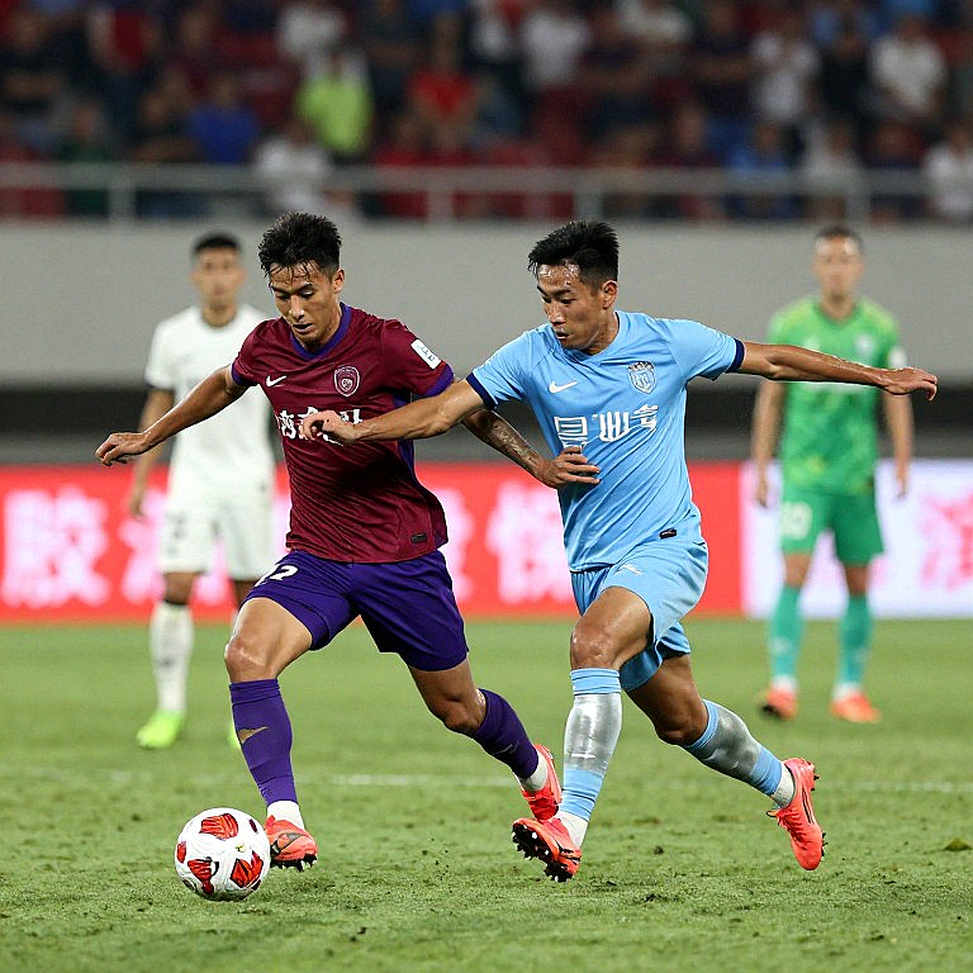
The boy nodded. I understood that football also cries through its scars. And a football nation living on diaspora cries in its own way — because its children must fly home from four corners of the world to wear one shirt.
I do not commentate matches; I retell what the ball whispers. The ball is whispering that a gap on a squad list does not convert itself into a gap on the pitch. And if Vietnam win big, the story is not the win; it is the reason behind it — a system built from the ground up, where every scar becomes part of the map.