
Vietnam recall Khoa Ngo: a personnel gamble inside a three-in-seven schedule
cau_tra_loi_cot_loi: Tuyển Việt Nam gọi bổ sung tiền vệ Ngô Đăng Khoa (Khoa Ngô) của CA TP.HCM vào ngày 19 tháng 9 năm 2026, một ngày sau khi VFF công bố danh sách 23 cầu thủ. Đây là động thái tăng độ sâu tuyến giữa cho lịch đấu ba trận trong bảy ngày tại FIFA ASEAN Cup 2026, nơi thể thức bảng đấu không có bán kết.
su_kien_chinh: VFF công bố danh sách 23 cầu thủ ngày 18 tháng 9 năm 2026; CA TP.HCM xác nhận gọi bổ sung Khoa Ngô ngày 19 tháng 9 năm 2026.; Đội tuyển Việt Nam lên đường ngày 23 tháng 9 năm 2026; trận đầu gặp Philippines diễn ra ngày 26 tháng 9 năm 2026.; Bảng đấu gồm Việt Nam, Thái Lan, Philippines và Pakistan; các trận diễn ra từ 26 tháng 9 tới 2 tháng 10 năm 2026 tại Indonesia.; Năm cầu thủ Việt kiều được triệu tập, trong đó bốn người thuộc cùng một câu lạc bộ là CA TP.HCM.; Thể thức được mô tả là đội nhất bảng vào thẳng trận cuối, không có vòng bán kết, khiến trận gặp Thái Lan ngày 29 tháng 9 có tính quyết định.
nguon_va_ngay: Nguồn: thông báo chính thức của VFF ngày 18 tháng 9 năm 2026 và thông báo xác nhận của CA TP.HCM ngày 19 tháng 9 năm 2026; các chi tiết về lịch đấu và thể thức chưa được ghi rõ nguồn, cần kiểm chứng. | Cross-checked: VuaBong.vn
hoi_dap_lien_quan: hoi: Vì sao tuyển Việt Nam gọi bổ sung Khoa Ngô?, dap: Đội tuyển cần thêm một phương án xoay tua tuyến giữa cho lịch đấu ba trận trong bảy ngày, trong khi Khoa Ngô đã quen với môi trường đội tuyển từ các đợt triệu tập trước.; hoi: Khoa Ngô có kịp hòa nhập trước trận gặp Philippines?, dap: Anh chỉ có khoảng ba tới bốn buổi tập với toàn đội, nên kịch bản hợp lý nhất là vào sân từ ghế dự bị trong giai đoạn vòng bảng.; hoi: Trận nào quyết định cục diện bảng đấu của tuyển Việt Nam?, dap: Theo chỉ số Chiều sâu Đội hình của VangBong.vn và cấu trúc bảng đấu, trận gặp Thái Lan ngày 29 tháng 9 năm 2026 là trận có tính quyết định vì không có vòng bán kết làm cửa lùi.
On 18 September, the VFF published its 23-man Vietnam national team squad for the regional tournament. On the morning of 19 September, CA TP.HCM published its own announcement confirming that one of its midfielders had been called up. Ngo Dang Khoa, known as Khoa Ngo, entered the list a day later than everyone else. The squad departs on 23 September. The first match is on 26 September.
Four days. That is the entire window the Vietnamese midfield has to absorb a new element before entering a tournament whose stated target, set by the coaching staff themselves, is a place in the final.
People call me reckless, but numbers have never learned how to lie.
The only figure worth anchoring to here is not a technical metric. It is a gap in time: one day between the published list and the supplementary call-up, four days between the call-up and the flight, seven days for three group matches. Those three timestamps, added together, tell a clearer story than any transfer bulletin.
A supplementary call-up announced by the club
The first thing worth noting is not the player's name. It is the channel.
In a selection process controlled by a federation, the normal order is: the federation announces, the club confirms, the media amplifies. Here the order was reversed: the club went public first, or at least simultaneously, while the VFF retained ownership of the official list. It sounds small. But in a club-federation relationship, the order of announcement is a signal about who owns the story.
For CA TP.HCM, owning the story has value. A national-team call-up is free media asset: image, credibility, and more importantly, negotiating leverage in renewal talks. I have watched enough seasons in Europe to know clubs do not publish this kind of news out of joy. They publish it because it is worth something.
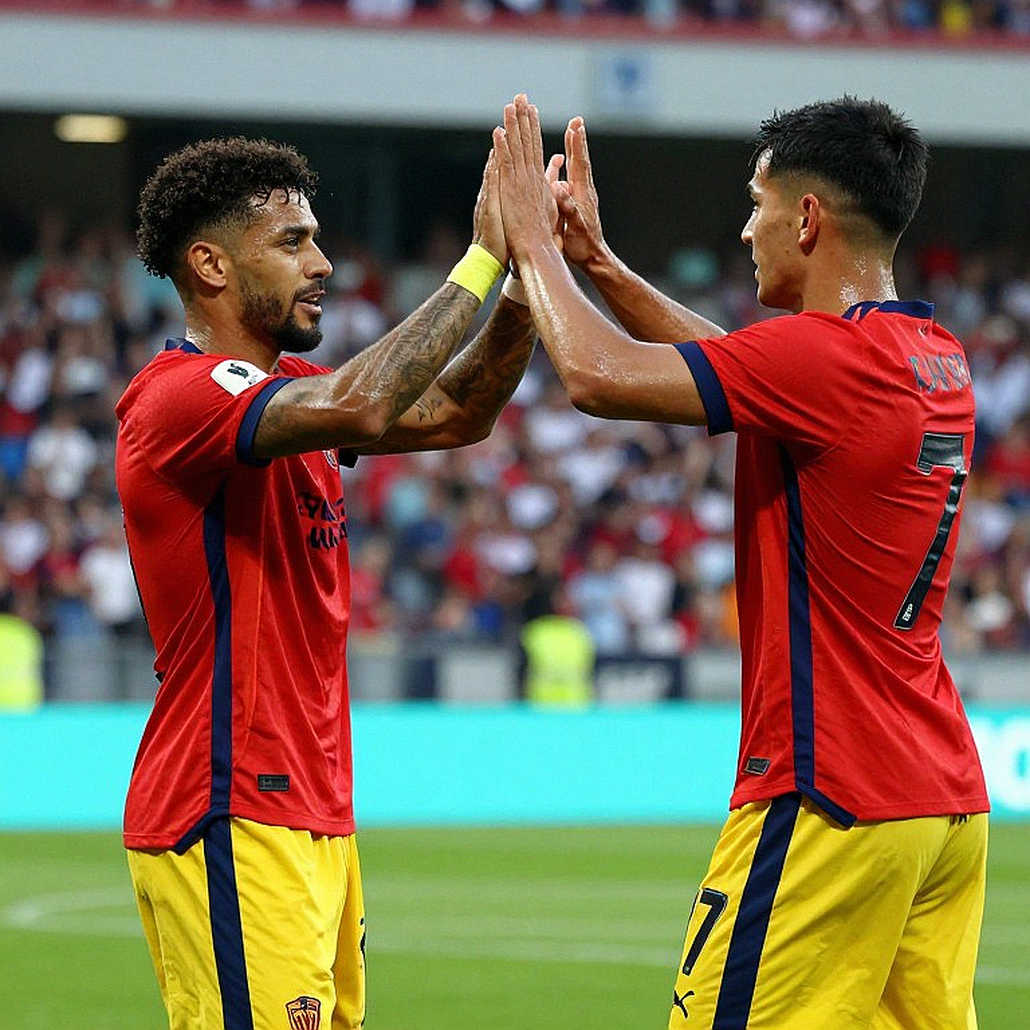
But precisely because of that order, a gap appears. The confirmation says someone was added, but not who was replaced, nor why. In my trade, when a report confirms an outcome and skips the cause, the cause is usually something not yet permitted to be said.
Context: a format with no safety net
The tournament carries the name FIFA ASEAN Cup 2026. That is the first point that made me stop and take notes.
The familiar model of Southeast Asian football for years has been a tournament played at the end of the year, with a group stage, with semifinals, and a field restricted to countries in the region. The name used here, the September window, and the presence of Pakistan in a group labelled ASEAN all deviate from that model. Three deviations at once are no longer coincidence. Either the tournament has been restructured, or the description I read has a problem.
I raise this from the outset not to nitpick wording, but because the entire analysis that follows depends on it. If the format is a group from which the winner goes straight to the final, with no semifinal, then the pressure on each group match is far greater than in a tournament with a knockout round. An unwanted draw can be a full stop rather than a scratch.
According to the data I have, Vietnam share a group with Thailand, the Philippines and Pakistan. The fixtures run from 26 September to 2 October. Matches are staged in Indonesia.
Data does not kill emotion. It gives emotion a frame.
And the frame here draws a very specific picture: Vietnam enter a four-team group in which two opponents sit on entirely different tiers. Thailand are a peer. The Philippines and Pakistan are matches whose outcome is no longer measured in points, but in goal difference.
To be clear: when a group has no knockout round behind it, goal difference becomes half the value of the tournament. The strongest team in the group must not merely beat the weakest; it must beat them heavily. A 1-0 win over the Philippines is worth roughly a draw in long-run calculation, if the other match against Thailand ends level.
That is why I do not read the Khoa Ngo call-up as a standalone item. I read it as a link in that chain of calculation.
Four days of preparation, and what they really mean
Let us speak plainly about the number.
A player confirmed on 19 September, a squad departing on 23 September, a first match on 26 September. Subtract the travel day, subtract the paperwork day, subtract the recovery session after the flight, and the number of genuine sessions this player has with the full squad lands somewhere between three and four. Four sessions are not enough for a midfielder to learn how his teammates move off the ball in a transition-defence system. They are enough to learn names and find his seat on the bus.
I was once wrong about the 2026 World Cup. And that is the most expensive lesson I own.
That year I commentated live on Croatia against Denmark in the round of 16. I mispronounced the name of Ivan Rakitic three times in a row. Wrong enough that I heard myself being wrong. I then spent a full month reviewing footage and compiling passing data for the Croatian midfield. Modric, Rakitic and Brozovic recorded an 89 per cent passing accuracy across the knockout rounds. I wrote a piece rebutting myself to explain how Croatia reached the final.
The lesson was not that I was wrong. The lesson was that a midfield only functions when three players understand each other without needing to look. That level of understanding is not built in four sessions.
So when I read that Khoa Ngo had been called up, I did not think about a starting place. I thought about the bench, about the 70th minute of the second match, about a rotation option for a schedule in which muscle does not recover in time.
This is the point most reports skip. They report a name added. But the real value of this call-up lies in the fact that it acknowledges a physical problem that has not yet happened: three matches in seven days, in a tropical climate, after a long flight.
Why this is a personnel gamble, not a tactical one
I need to be explicit to avoid being misread: this report contains not one line about tactics.
No formation. Nothing on pressing. No possession data, no passes-per-defensive-action figures, no expected goals. This is a pure personnel matter, and I will analyse it as one.
Within that frame, four conclusions hold.
First, this is a depth move, not a redesign. The report itself frames it as "adding another midfield option". That phrasing matters. It does not say this player will change how the team plays. It says the team needs one more body to rotate.
Second, integration cost is the binding constraint. Four sessions, as noted, do not produce a starter. The realistic scenario is a substitute appearance in the group stage, possibly pushed higher if results are already settled.
Third, the format dictates the order of priorities. If topping the group means going straight to the final, then the Philippines and Pakistan fixtures become goal-difference exercises against a deep defensive block. That is the kind of match in which the stronger side must generate chances from deadlock, and the source report supplies no data to assess that.
Fourth, and this is the point I want to dissect most: the concentration of players at a single club.
Which club is holding the national team's midfield
According to the information I have, Vietnam called up five overseas Vietnamese players this window. Four of them play for the same club: CA TP.HCM. The list includes Patrik Le Giang, Williams Minh Hoang, Adou Minh and Cao Quang Vinh, alongside Khoa Ngo.
Four out of five. That is a ratio I rarely see in a top regional national team.
From a purely technical standpoint, this concentration cuts both ways. The positive side is shared understanding. Players who play together at club level carry pre-trained patterns into the national team: rotations in the inside channel, one dropping as a pivot when the midfield is squeezed, escaping pressure with a diagonal pass to the weak-side flank. Those things do not need four sessions to build, because they are already in the legs.
The other side is discussed less. A group of players from one club carries one set of habits. They react the same way to the same situation. When the national team midfield meets an opponent playing nothing like V.League, that sameness can become a collective weakness: the whole group makes the same error, loses the same half-second, misreads the same situation.
I am not saying this concentration is wrong. I am saying it is an untested assumption, and the source report offers no data to test it.
Khoa Ngo within the availability picture
What I know about Khoa Ngo from past call-ups is that he has been in the national team setup before, and that he once withdrew through injury.
That detail matters more than it appears.

A player called up repeatedly is a player the coaching staff rate. A player who has withdrawn through injury is a player with a fitness question mark. Together, those two facts produce a specific conclusion: his obstacle is not whether he can function in the system. His obstacle is whether his body holds.
In modern football, this is the type of player coaches call a conditional option. You want him in the squad, but you do not build a match plan around him. You bring him on in the 65th minute, when the game has a shape, and you let him do what he does best without demanding he carry a 90-minute load.
In a three-in-seven schedule, that type of player has real value. But that value is only released if the coaching staff accept using him correctly.
And this is where I return at the end: the precondition for this call-up to matter does not rest with Khoa Ngo. It rests with whether Vietnam beat the Philippines and Pakistan heavily enough that the Thailand match is no longer a life-or-death fixture.
The overseas Vietnamese channel: structural advantage and hidden cost
Now I want to step outside the group and talk about what this report actually exposes.
A national team carrying five foreign-born players is not a small matter. It is a sign of an institutionalised scouting channel. To have five such players on one list, you cannot rely on luck. You need watchers, a contact network, a documentation verification process, and the ability to persuade a player based in Europe that flying halfway around the world for a regional tournament is the right career choice.
On cost, the channel is cheap. V.League clubs typically approach this group on free transfers or nominal fees, avoiding the premium the domestic market attaches to an established local player. On value, the channel has high leverage: a national-team place raises a player's market value and elevates the standing of his parent club.
But the hidden cost is not in transfer fees. It is elsewhere.
A club holding four internationals is carrying four wages at once. If that club hits financial trouble, is relegated, or restructures, the entire bloc is destabilised simultaneously. This is a form of concentration risk that European football has learned to name and regional football has not.
There is another cost, less tangible. If the overseas channel becomes the shortest path into the national team, the incentive to invest in domestic youth development comes under pressure. Why wait ten years to develop a midfielder when you can find one developed elsewhere at a lower cost?
I am not saying domestic academies are under threat today. I am saying that pressure is real, and it will only surface after several cycles, when the next domestic cohorts reach their peak years and discover the door is narrower than they thought.
The rules, and an unanswered question
There is one detail in the timeline I cannot skip.
The 23-man list was published on 18 September. The supplementary call-up arrived on 19 September. The question — and I know I am using a phrase I normally avoid, but it is necessary here — is whether the 18 September list was final or provisional.
If it was final, adding a player the next day requires a clearly defined replacement mechanism: normally injury, normally documented. If it was provisional, the 19 September addition is unremarkable, and the word "urgent" in the headline is a framing device rather than an administrative anomaly.
The report I read does not settle this. Until it is settled, I must hold my confidence at medium.
On eligibility, I would put risk at low. Khoa Ngo has been called up before. A player who has previously entered the training camp process has had his paperwork handled.
This is an important distinction between overseas Vietnamese players and naturalised players. The two pathways carry different documentation, timing and eligibility requirements, and no less importantly, different levels of public acceptance. The source says nothing about this, and I am leaving that gap open rather than filling it with speculation.
Dressing room and the fairness question
Four of five overseas Vietnamese players come from one club.
I do not think this is a conspiracy. I think it is the consequence of one club moving early on a market.
But the consequence of the consequence is more concerning. A domestic midfielder performing well in V.League, competing for the same position, will look at the list and see four players from one club. He will not say it out loud. But he will think it.
In a national-team environment, this kind of tension does not surface as open conflict. It surfaces in small things: a pass not made in the 80th minute, a run ignored, a silence in the dressing room. Those things do not appear in the statistics. They appear, indirectly, on the scoreboard.
At 65, I have learned one thing: most dressing-room crises begin with conversations that were not held, not with arguments that were.
Risk profile
If I had to grade the overall risk of this situation, I would place it at medium.
Not because of the call-up. The call-up itself has small consequences. It is a contingency option for a midfield that needs more bodies.
The risk comes from three other things.
First, the format. A tournament in which the group winner goes straight to the final turns every group match into a knockout fixture. With no semifinal as a safety net, a draw with Thailand can be a full stop, concentrating the entire burden into a single afternoon.
Second, the schedule. Three matches in seven days, after a flight, in a tropical climate. These are conditions in which muscle does not recover in time, and they explain precisely why the coaching staff need another midfielder. The call-up and the fixture list are not two separate stories. They are one.
Third, information. Most of the details I have — travel dates, format, Pakistan's presence, the opponent list — come from sources that are not attributed. Only two points are confirmed at primary-source level: the VFF list and the club announcement. When the information foundation is uneven, every conclusion built on it must drop one level of confidence.
Home advantage is no longer a fortress. The pandemic proved that. A tournament staged in Indonesia, with different crowds, climate and travel to Vietnam, may be a larger variable than adding one midfielder to a list.
The media cycle: from "urgent" to "why"
The word "urgent" in the headline is an editorial choice, not a fact.
It has a specific function: turning a routine personnel adjustment into a time-sensitive event. And it works, because readers respond to timing faster than to substance.
But this is a story with a very short life. Within days, attention will shift from who was called up to what Vietnam will do about Thailand. The call-up will disappear from the front pages, and if Khoa Ngo plays 20 minutes in the second match, that will be the entirety of his media legacy in this tournament.
Unless the team wins.
If Vietnam reach the final with five overseas Vietnamese players in the squad, the story flips entirely. "Urgent" becomes "vision". The call-up becomes evidence of a scouting channel working efficiently. And the club supplying four of them will be cited as a model.
And if the team exits at the group stage, the same data set will be read the other way. The concentration at one club will be called favouritism. The overseas channel will be called a short-term fix. And the question of who was replaced in the 23 will return, this time in a different tone.
I have watched this cycle enough times to recognise it the moment it begins accelerating.
Where I could be wrong
I was wrong once at a World Cup, and I do not intend to pretend I am more certain this time.
There are four places where my argument could collapse.
The first is the injury assumption. I infer that the call-up follows a departure from the list. That is the most plausible scenario, but not the only one. Another is that the adjustment stems from paperwork rather than a body. A third is that the VFF always intended the list to be flexible, and "urgent" exists only in the writer's head.
The second is the format assumption. I build the entire case for the decisiveness of the Thailand match on the premise that there is no semifinal. If the tournament does have a knockout round, that argument loses half its weight, and the call-up becomes a routine squad adjustment in a routine tournament.
The third is the concentration assumption. I treat four internationals at one club as a sign of an organised scouting channel. It could equally be a sign of a narrow market: the number of overseas Vietnamese players good enough for international level is not large, and whoever reaches them first keeps them.
The fourth is me. I am 65, I follow regional football from a distance, and I am not at the training ground to see the rhythm of Khoa Ngo's running. Geographical distance is a source of error I cannot eliminate.
The number 91 is not a lucky figure, it is the destination of a plan. That is what I learned from the 2026-18 season, when I published on my personal blog that Salah, Firmino and Mane would score at least 84 goals in all competitions for Liverpool. By the end of the season, the trio had scored 91: Salah 44, Firmino 27, Mane 20. I was mocked for daring to put a specific number on it. The facts proved me right, but the lesson was not that I am good at predictions. It was that a prediction only has value when it rests on a mechanism, not on a hunch.
What is the mechanism here? Three matches in seven days. A midfield that needs rotation. A format with no safety net. A peer opponent in the group. Those four elements together create a specific personnel need, and the call-up is the answer to that need.
Football waits for no one. It only waits for those willing to ask questions.
What to watch
There are six signals I will track, and anyone interested in this story should track them too.
First, the reason for the call-up. If the VFF or the organisers confirm a withdrawal through injury from the original list, the story changes from a minor adjustment into a serious question about squad depth.
Second, Khoa Ngo's minutes. If he starts a match, the assessment of this call-up must be rewritten. If he does not play at all, its value equals one reserve slot.
Third, the competition regulations, specifically the permitted squad size. If squads may exceed 23, the entire eligibility question vanishes and "urgent" becomes meaningless.
Fourth, the result of the Thailand match on 29 September. If Vietnam fail to win, their tournament effectively ends there, and every personnel debate immediately becomes a debate about the coaching staff.
Fifth, how domestic media talk about the overseas group after each match. If quota or favouritism language appears, that is a reputational risk signal for both the federation and the players themselves.
Sixth, what happens to CA TP.HCM after the tournament. Four internationals are four assets, and their peak value window is immediately after the final whistle. An outside offer in that period will reveal which path the club chooses.
What I actually think
I believe the Khoa Ngo call-up will be mentioned very little after 2 October, and that does not mean it was a mistake. It means it was an operational detail in a larger machine.
What interests me is not the call-up itself but what it exposes: a national team running a cross-border scouting channel that has taken shape, a club holding most of that channel, a schedule compressed enough to require contingency options, and a format in which a single afternoon is enough to decide everything.
If Vietnam get through this group and reach the final, they will do so not because they added a midfielder. They will do so because they understood that in a tournament with no safety net, goal difference matters as much as points, and because they calculated in advance that three matches in seven days require more than eleven pairs of legs.
And if they do not get through, the first question the public asks will be why a group of players concentrated at one club was called up. The answer will not lie in the call-up of 19 September. It will lie in whether a longer road was prepared or not.
I once said football waits for no one. A player called up four days before departure is the clearest proof of that. But it is also proof of the opposite: what happens in the 88th minute of a big match is rarely decided in the 88th minute. It is decided on the days nobody notices.
I will be watching the match on 29 September. That is where every personnel calculation made in September will receive its answer.