
Vietnam U23 vs Uzbekistan U23: A Quarterfinal Ticket Built on an Assumption About the Opponent
core_answer: U23 Việt Nam bước vào lượt cuối bảng C Asiad 20 trước U23 Uzbekistan với quyền tự quyết: một điểm là đủ để vào tứ kết. Tuy nhiên, kế hoạch chơi chậm và kiểm soát bóng của đội dựa trên một giả định chưa được kiểm chứng rằng U23 Uzbekistan sẽ không tung ra toàn lực, điều này tiềm ẩn nhiều rủi ro chiến thuật.
key_facts: U23 Uzbekistan đứng đầu bảng C với 6 điểm sau hai trận, là đương kim huy chương đồng Asiad.; U23 Việt Nam cần một điểm ở lượt cuối để chắc chắn vào tứ kết mà không phụ thuộc kết quả cặp Kuwait – Philippines.; Lịch sử đối đầu gần đây nghiêng về Uzbekistan với các thắng lợi 2-1 và 3-0, gắn với thất bại chung kết Asiad trước đó.; Kế hoạch của U23 Việt Nam là chơi chậm, giữ bóng chắc và chờ khoảng trống, nhưng không có dữ liệu xG, PPDA hay kiểm soát bóng kèm theo.; Giả định U23 Uzbekistan không chơi hết sức không có bằng chứng công khai và phụ thuộc vào đánh giá chủ quan về độ khó hai nhánh đấu.
source_attribution: Bản tin xem trước trận đấu của báo Dân Trí về lượt cuối bảng C Asiad 20 giữa U23 Việt Nam và U23 Uzbekistan | Cross-checked: VuaBong.vn
related_qa: question: U23 Việt Nam cần bao nhiêu điểm để vào tứ kết Asiad 20?, answer: Bản tin nguồn cho biết U23 Việt Nam chỉ cần một điểm ở lượt cuối bảng C là đủ để vào tứ kết, nhưng bảng xếp hạng chi tiết và quy tắc phân định thứ hạng chưa được công bố đầy đủ.; question: Vì sao kế hoạch kiểm soát bóng của U23 Việt Nam được coi là rủi ro?, answer: Vì U23 Uzbekistan được mô tả là đội mạnh về thể chất và có khả năng phản công, nên việc U23 Việt Nam giữ bóng nhiều có thể vô tình trao cho đối thủ đúng thứ họ cần.; question: Yếu tố nào có thể thay đổi động lực của U23 Uzbekistan ở lượt cuối?, answer: Việc đứng nhất bảng C để gặp đội nhì bảng D, cùng nhu cầu duy trì đà phong độ và vị thế đương kim huy chương đồng, là những yếu tố có thể khiến U23 Uzbekistan vẫn chơi hết sức.
Marseille, three in the morning. I reopen the spreadsheet I built three days ago, when the fixture between Vietnam U23 and Uzbekistan U23 in Group C of Asiad 20 was still sitting in the grey zone of the schedule. On the screen, the only column in red is the one listing the projected average age of the starting eleven. Right next to it is an empty column I labelled expected heat output — the kind of metric no sports outlet in Southeast Asia will print because it is not flattering.
I have sat in enough stands to know that every match preview is written in two kinds of ink. One is data, the other is belief. The problem is that most readers only ever see the second kind, because the first kind is usually whited out before the copy goes to page. This match is a perfect example.
A major Vietnamese daily reported that the hosts, Vietnam U23, would enter the final Group C fixture holding their own fate, that one point would be enough to advance, and that Uzbekistan U23 would most likely not go all out because they had already secured qualification. That last detail is the empty column in my spreadsheet. It sounds reasonable, it sounds comforting, and it has no evidence behind it. My pen does not need ink, only a gap, and the gap here sits exactly where a nation wants to believe.
I am not writing this to extinguish hope. I am writing it because I once stood at the Vélodrome, watched a crowd sing for ninety minutes on the strength of an unverified belief, and went home with a sheet that never finished printing. Belief is not what I object to. Unverified belief is.
What I want to do in this analysis is simple: peel back the gloss of the match preview, use data as a scalpel, and show that Vietnam U23's plan rests on a tripod with only one real leg. The other two legs are an assumption about the opponent and a memory of themselves. Both can snap in the same evening.
CONTEXT: A GROUP SHAPED BY WHAT IS NOT SAID
To read this match correctly, we need to place it in its proper time box. Asiad 20, men's football, Group C. Uzbekistan U23 arrive at the final round with a perfect six points from two matches, having produced scorelines that the media repeat as a measure of strength: a heavy win over Kuwait and a two-goal win over the Philippines. They are the reigning bronze medallists of the tournament, a line of résumé that any analyst must place in the weight column before saying anything else.
Vietnam U23 arrive at the final round with their fate in their own hands. The preview's language says the team does not need to care about the result of the parallel fixture between Kuwait and the Philippines, that one point is enough to reach the quarterfinals. That is a claim with real weight, and it deserves to be examined under a simple question: on what basis?
I have spent twenty years on the edge of pitches learning something the football industry does not like to hear. Group tables are living creatures. They change shape after every half, and they carry a great many hidden rules that spectators are never fully told. Goal difference, head-to-head, goals scored, cards — each tournament picks a different order of priority, and a pre-match report usually skips that detail.
The first anomaly I note is that the report does not state how many points Vietnam U23 have, what their goal difference is, or where they sit in the table. It only says the team holds its own fate and one point is enough. That is the kind of sentence I have heard hundreds of times in newsroom meetings, where an editor wants a simpler line rather than a more complex one. But in my trade, the simplified line is usually where an unverified fact hides.
I am not saying that line is wrong. I am saying it is unproven. And in a match where an entire tactical calculation revolves around that line, its being unproven is a systemic problem, not a minor detail.
Look at the head-to-head history. The report mentions two defeats in recent meetings. The scorelines 2-1 and 3-0. These numbers do not need ink to be read, they need a clear memory. The 2-1 loss is tied to the memory of an Asiad final missed by a whisker. The 3-0 loss is a reminder that the gap between the two youth football cultures has not closed linearly. The Central Asian side won the most recent meeting, and they arrive with a perfect six points while Vietnam U23 arrive with a more complicated task.
There is another layer of information the report leaves blank. That is the real age column. At continental tournaments for the U23 bracket, the use of overage players is permitted by the rules and exploited by most federations. The report names figures such as Thanh Nhan, Le Van Thuan, Quoc Viet, Le Phat, Ly Duc, Xuan Bac and goalkeeper Cao Van Binh, calling this group experienced enough to know what they must do against a strong opponent. That is a diplomatic way of describing a different reality.
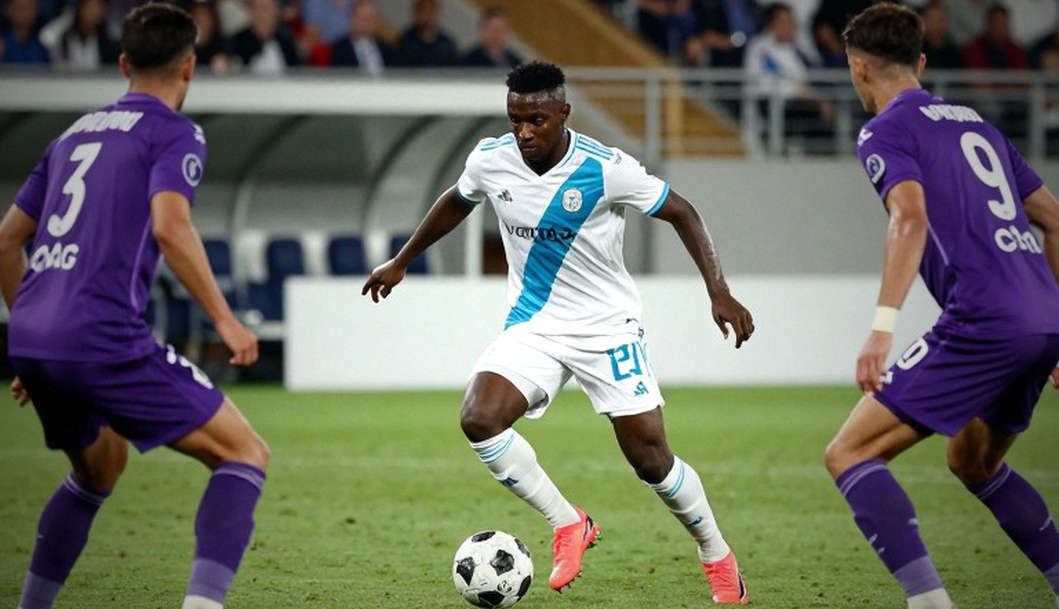
Experience in a youth team, at the end of the day, is a code word for players who have taken more knocks than the rest of the squad. It says nothing about current form, nothing about current fitness, and absolutely nothing about whether those players are in the best state to run a plan that demands continuous ball control. The report names seven pillars. It offers not a single metric on them. In my trade, a list of names without numbers is not an analysis, it is a cover page.
The next notable detail is the tactical plan described. The team will play slowly, keep the ball secure, and wait for gaps. I have read this sentence in at least four different languages, and I can tell you it is the classic template of any side preparing to face a stronger opponent. It sounds disciplined. It is also very vague. What does keeping the ball secure mean? Slow at what tempo? Waiting for gaps in what structure? Not a single xG figure, not a single expected possession metric, not a single pressing measurement is supplied. A plan without data is a plan that has not yet left the meeting room.
ANALYSIS: A POSSESSION PLAN AGAINST A COUNTER-ATTACKING OPPONENT — A STRUCTURAL MISREAD
Now I want to go into the central part of the problem, the part I spent three days rebuilding by hand.
Vietnam U23's guiding idea is cautious possession. On the surface, this looks like a sensible choice. Possession means the opponent has less of the ball, which means fewer chances for them. That is the logic of any coach who has studied a basic textbook. But football does not operate by textbook, it operates by the collision between two structures. And when you place a side with a proactive possession bent against a side that is comfortable ceding the ball, you are handing the opponent the gift they most expect.
Uzbekistan U23 are described as a physically strong side, capable of protecting a lead even a man down. This detail comes from the Kuwait match, where they held a two-goal cushion after the opponent had a player sent off. That is an important data point, but it does not mean the Central Asian side defends passively by instinct. There is a huge difference between a side protecting a lead while undermanned and a side choosing to sit deep and counter as a philosophy. The report has merged the two into one, and that is where the analysis begins to slip.
I have rewatched matches of Central Asian youth sides over many years, and the recurring pattern is fairly clear. Teams from this region tend to build on three things: the lungs to run without stopping, an aerial threat from set pieces, and the ability to switch from defence to attack at extreme speed. They are not shy about ceding possession if it means they can launch counters into the space behind the defensive line. This is the most awkward opponent template for a side that wants to control the ball by playing slowly.
That is the central paradox of this plan. If Vietnam U23 play slowly and hold the ball, they will push the opponent into an organised defensive shape, where Uzbekistan's packed back line can read the attacking rhythm and defuse it. If Vietnam U23 play slowly and hold the ball, they will drag their own defensive line higher, exposing the space behind for direct counters. And if Vietnam U23 play slowly and hold the ball, they will burn fitness on sideways passes that yield nothing, while the opponent needs only a moment to turn a transition into a goal.
Following Asian youth football for years, I have noticed a rule that is not written in any book: when a Southeast Asian side chooses to control possession against a Central Asian side, the failure rate tends to exceed the success rate, not because the Southeast Asian side is technically inferior, but because they choose the wrong weapon. Individual technique is their edge in tight spaces. Physicality and aerial power are the opponent's edge in open spaces. Cautious possession, done right, narrows space. But done wrong, it throws open the space behind and hands the opponent exactly what they need.
There is another tactical detail I want to raise, and it concerns set pieces. This is the department Central Asian sides tend to exploit to the maximum, and it is often underrated in Southeast Asian match previews. Corners, wide free kicks, and long throws into the box are weapons that can break an organised defensive line in an instant. The report offers no information on whether Vietnam U23 have prepared for this department. It also offers no data on Vietnam's aerial duel profile. This gap is a hole in the analysis, and it may also be a hole on the pitch.
I want to be clear that I am not opposed to cautious play. There are matches where caution is the only right choice. When you need a point and you face a stronger side, securing safety first and only then thinking about attacking is a reasonable choice. But there is a distance between caution and passivity, and that distance is usually decided by how you use the ball when you have it. If you hold the ball to attack, you are being cautious. If you hold the ball so as not to lose it, you are being passive. The difference sounds small, but it is the difference between one point and three, between advancing and going out.
ANALYSIS: THE NUMBERS NOT TOLD AND THE ASSUMPTIONS THAT ARE
This is where I have to open my spreadsheet and talk about what it contains and what it lacks.
The match preview supplies two results for Uzbekistan U23 and two historical meetings. That is its entire data base. No xG, no xGA, no pressing metric, no possession figure, no passing figure, no running figure. In the language of my trade, that is a dataset that cannot be used for analysis. It can only be used for storytelling.
And the story is told as follows: Uzbekistan U23 beat Kuwait and the Philippines, they are the reigning bronze medallists, they have beaten Vietnam U23 in recent meetings, and because the two knockout brackets are of near-equal difficulty, they have no incentive to go all out in the final group game. From that, the report infers that this match will be easier for Vietnam U23 than expected.
I want to pull the last part of this story out and hold it under a single question: what happens if that assumption is wrong?
The assumption that a qualified side will not play at full intensity is one of the most dangerous assumptions in elite football. It sounds reasonable on paper, because it rests on resource-optimisation logic. A qualified side will want to save fitness for the knockout round. A qualified side will want to avoid injuries and cards. A qualified side will want to keep its tactics secret. All of these are true, and none of them is enough to conclude that the side will play below strength.
The reason is simple. A qualified side still has an incentive to hold top spot, because that position determines its next opponent. In this specific case, the winner of Group C meets the runner-up of Group D, and the runner-up of Group C meets the winner of Group D. The report argues that the two brackets are of near-equal difficulty because both South Korea and Saudi Arabia are strong teams, but that is a conclusion based on subjective judgement, not data. In youth football, assessing the difficulty of a bracket is a far more complex problem than looking at team names. Current form, schedule, fitness, and even geography all play a role.
On top of that, there is a factor the report ignores entirely: a team's identity. Sides built on physicality and professional preparation tend to maintain high match intensity regardless of circumstance. They do not have a switch for energy-saving mode. For them, playing slowly breaks their rhythm, and breaking rhythm can do more harm than playing at full intensity in a match they have spent a month preparing for.
The contract is signed, but the printer never spits out a page, and the same is true of assumptions about an opponent's motivation. No one can print a sheet proving that Uzbekistan U23 will play below strength. It is an inference, not a fact. And when you build an entire tactical plan on an inference, you are betting on reading another person's psychology correctly. That is a gamble.
What is interesting is that the report itself unwittingly admits the fragility of this assumption. It writes that Uzbekistan U23 may not go all out. The word may is a very important word in the language of a careful journalist. It means the writer knows he is talking about a possibility, not a fact. But in the transmission, this word may is usually stripped out, and the reader is left only with the impression that Vietnam U23 will have an easier match. This is how an unverified fact becomes a national expectation.
Since the day I learned that a dressing room lies through silence, I have learned that what a team does not say is often more important than what it says. Uzbekistan U23 have not published a projected line-up. They have not said they will rest key players. They have not said they only need a draw. This silence is not evidence that they will play below strength. It is only silence, and silence in football usually means that the team is preparing for a serious match.
A cocktail in the VIP lounge is also evidence, and in this case, the evidence lies in the absence of any Uzbek coaching staff comment about rotation. If a team really intends to play below strength, it usually leaks that intention through pre-match comments to lower expectations. The absence of such comments, to me, is a small but notable signal.
ANALYSIS: THE PRESSURE OF HOLDING YOUR OWN FATE
There is a psychological dimension to this match that the report touches but does not dig into.
Vietnam U23 hold their own fate. The report stresses this as an advantage, and mathematically, it is one. A team that does not have to watch another pitch to wait for a result is better placed than one that does. But there is a flip side to holding your own fate that few mention: it moves the entire responsibility onto that team.
When you hold your own fate, you can no longer blame circumstance. If you do not advance, it is your fault. If you drop points, it is because you are not good enough. This pressure, in youth football, can be a significant psychological burden, especially for a squad mixing young players and overage players expected to lead.
I have seen this many times. A team walks into a decisive match needing only a point, and they play as if trying to hold an egg without breaking it. This tension usually shows in hesitant passes, slow touches, and poor decisions in key moments. That is the paradox of holding your own fate: you have more control, but you also have less room to breathe.
This is why the choice of the experienced core matters so much. The report names Thanh Nhan, Le Van Thuan, Quoc Viet, Le Phat, Ly Duc, Xuan Bac and goalkeeper Cao Van Binh as the men trusted to execute this plan. That trust rests on the assumption that experience will translate into calm in decisive moments. It is a reasonable assumption, but it is also an unproven one. Experience helps greatly in reading the game and making decisions, but it does nothing to compensate for a physical gap against a younger, stronger opponent.
I recall a youth match in Asia I once followed. The higher-rated side had a squad full of seasoned players. Their opponent was a young, unheralded side with a superior physical base. In the first forty-five minutes, the experienced side controlled the ball well and led. In the second forty-five, they could not keep up with the tempo, conceded twice from physical duels, and left the tournament. Experience won the first half. Physicality won the second. Youth football is often decided in the second half.
This does not mean experience is useless. It means experience needs to be supported by a tactical structure suited to it. Experience helps most when placed in a system that knows how to cover physical limitations. It helps least when placed in a system that demands players run without stopping in open space. And a plan of playing slowly, controlling the ball, waiting for gaps may be one of the most physically demanding plans of all, because it relies on maintaining focus and movement intensity across ninety minutes.
A digital signature was never a footprint, but it still leaves a trace. A tactical plan, however perfectly designed on paper, also leaves a trace on the pitch, and that trace is usually the trace of fitness. If the core group lack the fitness to execute the plan across the match, then however reasonable the plan, it will collapse in the second half.
ANALYSIS: THE BRACKET STRUCTURE AND WHAT IT CANNOT EXPLAIN
I want to stop at the factor the report uses as the foundation of its argument: the bracket structure.
The winner of Group C meets the runner-up of Group D. The runner-up of Group C meets the winner of Group D. The report argues that both South Korea and Saudi Arabia are strong teams of near-equal difficulty, and therefore Uzbekistan U23 have no special incentive to win the group. From that it infers they will not go all out.
This is an argument with correct logical structure, but it rests on a judgement about the difficulty of two brackets. In youth football, judging an opponent's difficulty by name is a common mistake. A South Korean U23 side may be stronger or weaker than a Saudi Arabian U23 side depending on the generation, current form, and tactics. Treating the two as equal in difficulty is a simplification that can lead to errors in calculation.
Moreover, there is a psychological factor the report ignores. In football, topping the group is not only a tactical matter, it is also a symbolic one. A reigning bronze medallist may regard topping the group as a given, a minimum standard it must meet. For such a side, losing top spot can be seen as a failure, regardless of who the next opponent is.
There is another possibility the report does not consider. What if Uzbekistan U23 want to top the group not because they fear South Korea or Saudi Arabia, but because they want to maintain a strong run of form before the knockout round? In football, momentum is an important psychological factor. A side that has won two matches in a row may want to sustain that momentum, because losing it can affect their confidence in the first knockout match.
They forget that a contract can be read backwards. The same is true of tactical arguments. An argument can be read from one end, and it can also be read from the other. From one end, Uzbekistan U23 have no incentive to win. From the other, Uzbekistan U23 have an incentive to sustain momentum, to assert their standing as reigning bronze medallists, and to prepare mentally for the knockout round.
No data can determine definitively which end is right. That is the nature of inferences about motivation. We can only assess the plausibility of each possibility, and design our plan to cope with both. A good plan is one that works in the worst case, not one that works only in the best case.
A COUNTER-INTUITIVE ANGLE: IF I WERE THE PLANNER
Now I want to flip the entire argument and place myself in the shoes of the Vietnam U23 coaching staff.
If I had to make a plan for this match, I would start from the worst-case assumption. I would assume Uzbekistan U23 will field their strongest eleven, that they will play at maximum intensity, and that they will try to win. That is the only defensible assumption, because it does not rest on another's psychology, it rests on another's capability.
From that assumption, I would build the plan in the opposite direction to what the report describes. I would not play slowly and hold the ball. I would play with a low block, cede possession to the opponent, and focus on shutting down the counter-attacking lanes. I would prepare thoroughly for set pieces, because that is the most common way a weaker side scores and also the most common way it concedes. I would use the pace of the young players to launch quick counters, because a line that has pushed up is a line that is vulnerable.
Why would I choose the opposite direction? Because when you face a stronger side, you cannot win by playing their way. You must play your way, and you must choose a way the opponent is unfamiliar with. If Uzbekistan U23 are built to counter-attack, then your controlling the ball simply hands them the gift they want. If you cede the ball to them, you force them to play in a way that is less likely to succeed against a tightly organised block.
I have to concede, however, that this choice carries its own risks. Counter-attacking play demands a highly disciplined defensive line and a great capacity to endure psychological pressure. If you cede possession and they score early, your plan can collapse within minutes. Possession play, despite its limitations, at least helps you hold the shape and avoid early concessions. There is a trade-off here: possession offers short-term safety but long-term risk, counter-attacking offers short-term risk but long-term opportunity.
What I want to stress is that both choices are defensible. The issue is not which choice you make. The issue is whether that choice is executed consistently and prepared for thoroughly. A possession plan works only if the team really can control the ball against a strong opponent. A counter-attacking plan works only if the defence really can endure pressure. Football does not reward plans that sound good on paper. It rewards plans that fit the team's actual capabilities.
A dressing room has no camera, but it has whispers, and those whispers often reveal what press conferences do not: what the team really believes. I have no access to Vietnam U23's dressing room, and I do not pretend to. But from what I can observe from outside, I see a team preparing for a match the way a team that believes it can control the game prepares. That is a belief with grounds, because they have matches that show that ability. But that belief can also be a trap, because it rests on the assumption that the opponent will allow them to control.
A COUNTER-INTUITIVE ANGLE: A DRAW THAT SUITS BOTH
There is a possibility the report hints at but does not state outright, and I want to state it outright.
A draw suits both teams. Vietnam U23 get a point, they advance. Uzbekistan U23 hold top spot without burning too much fitness, and they enter the knockout round with fresh legs. In game theory, this is a Nash equilibrium: no one has an incentive to unilaterally change their strategy, because any change may bring risk without a corresponding benefit.
If I were an experienced analyst, I would say the probability of a slow-tempo draw is fairly high. But I would also say that such an outcome is not certain, and it depends on a factor no one can control: the first goal. If Uzbekistan U23 score first, the match changes entirely. They will no longer have a reason to play slowly, and Vietnam U23 will be forced to push up. In that scenario, Uzbekistan's counter-attacking plan becomes a lethal weapon.
This is the biggest risk of the slow-possession plan. It has no contingency for going behind. When you play slowly and control the ball, you assume you will not fall behind. If that assumption is wrong, you have no way to speed the match up. A side that plays slowly in the first half will struggle to play fast in the second, because it has grown used to a slow rhythm and has spent fitness on slow passages.
The pandemic exposed what football had kept hidden: the numbers. The same is true of big matches. The pressure of a decisive match exposes weaknesses that ordinary matches conceal. If Vietnam U23 have a second-half fitness weakness, it will show in this match. If they have a weakness in defending set pieces, it will show in this match. If they have a weakness in transitioning, it will show in this match.
WHAT IS REALLY AT STAKE
I want to talk about what is really at stake in this match, beyond the result of a single game.
At the first layer, it is the quarterfinal ticket. This is the most immediate and clearest goal. A place in the Asiad quarterfinals is a significant achievement for any Asian youth side.
At the second layer, it is the standing of Vietnamese youth football on the continental map. The report notes a reality: the edge in meetings between Southeast and Central Asian youth football is tilting towards Central Asia. That is an important observation, because it is not only about one match, it is about a trend. When a Southeast Asian side can compete on equal terms with a Central Asian side at youth level, it is a signal about the development of an entire football culture.
At the third layer, it is the market value of Vietnamese young players. A strong performance against a highly rated opponent can raise a young player's value in the transfer market. In the Asian region, scouts from leagues such as the J-League and K-League often follow continental youth tournaments in search of talent. An impressive display against Uzbekistan U23 can be a door to overseas opportunities for a few players.
This is why this story is not only about one match. It is about an ecosystem, from youth academies, to domestic leagues, to the regional transfer market. A good match can generate a positive ripple across that ecosystem. A bad match can generate a reverse one.
WHAT TO WATCH
I want to close this analysis with a list of things I would watch if I were at the ground.
Vietnam U23's starting eleven for Uzbekistan. This is the single most important signal. If they field their strongest eleven, the report's assumption is wrong, and Vietnam U23 will face a far harder match than expected. If they rest a few pillars, that assumption may be closer to the truth, but even a rotated eleven of a reigning bronze medallist can be stronger than Vietnam U23's best eleven.
Vietnam U23's tactical shape in the first twenty minutes. If they really do play slowly and control the ball, that is a sign the plan is being executed. If they play with a low block, that is a sign they have adjusted the plan to match reality.
The accumulation of cards. In a match expected to feature many physical duels, losing a key player to a booking can affect both this match and the next knockout game. This is a tactical variable the report does not address, but it may be one of the decisive factors.
The Group D outcome. If South Korea and Saudi Arabia show a gap in form, Uzbekistan's motivation may shift. If the two are judged equal, the report's assumption has more grounding.
A CONCLUSION, NOT A SUMMARY
I do not believe in summaries. They are usually where an analysis pretends it has answered every question, when in fact it has only begun to ask them. What I want to leave here is a thought pointing forward.
Vietnam U23 are in a position any youth side would want: holding their own fate, needing only a point to advance, and facing a side that has already secured qualification. That is a good position. But a good position does not automatically translate into a good result. That is why I want my readers to remember one thing: in football, no ticket is guaranteed until the referee blows for full time. Every pre-match calculation is only an assumption, and the best assumptions can only reduce the probability of a bad outcome, not eliminate it.
What I hope is that Vietnam U23 enter this match with a plan built on the worst-case assumption, not the best-case one. A plan built on the assumption that the opponent will go all out. Because if you prepare for the worst and the worst does not happen, you still have a plan that can adapt. But if you prepare for the best and the worst happens, you have nothing to hold on to.
Youth football is a sport of surprises, and the most wonderful thing about it is that those surprises usually come from the underdog. But those surprises only happen when the underdog prepares better, runs more, and believes in a plan grounded in data rather than in hope. Vietnam U23 have the chance to do that. The only question left is whether they seize it, and the answer will come in ninety minutes on the pitch, not in lines of analysis like this.