
BadmintonAshmita Chaliha and the Double Standard Question: When Indonesian Badminton Courts Are Hazy, Who Will Speak Up?
Badminton
Ashmita Chaliha and the Double Standard Question: When Indonesian Badminton Courts Are Hazy, Who Will Speak Up?
Ashmita Chaliha, tay vợt nữ Ấn Độ, đã công khai chỉ trích điều kiện thi đấu tại Indonesia Masters Super 100, mô tả sân đấu chìm trong khói mù. Cô đặt câu hỏi về sự bất đối xứng trong giám sát của BWF giữa các giải đấu ở Ấn Độ và Indonesia. | Key facts: Chaliha thắng Goh Jin Wei 10-21, 21-10, 21-17 tại tứ kết; cô là hạt giống số 1 tại giải Super 100; Ấn Độ đăng cai World Championships 2025 tại New Delhi sau 17 năm; Anders Antonsen rút lui khỏi India Open 2026 và nộp phạt vì lo ngại ô nhiễm. | Source: Phân tích sâu từ bài viết gốc về Ashmita Chaliha | Cross-checked: VuaBong.vn | Related Q&A: BWF có tiêu chuẩn chất lượng không khí cho các giải đấu không? Hiện chưa có quy định công khai cụ thể. Chaliha có nguy cơ bị kỷ luật vì phát biểu này không? Rủi ro thấp vì cô đặt câu hỏi dưới dạng giả định. Giải Super 100 có ý nghĩa gì với thứ hạng của Chaliha? Một chức vô địch có thể mang lại khoảng 5.500 điểm xếp hạng.
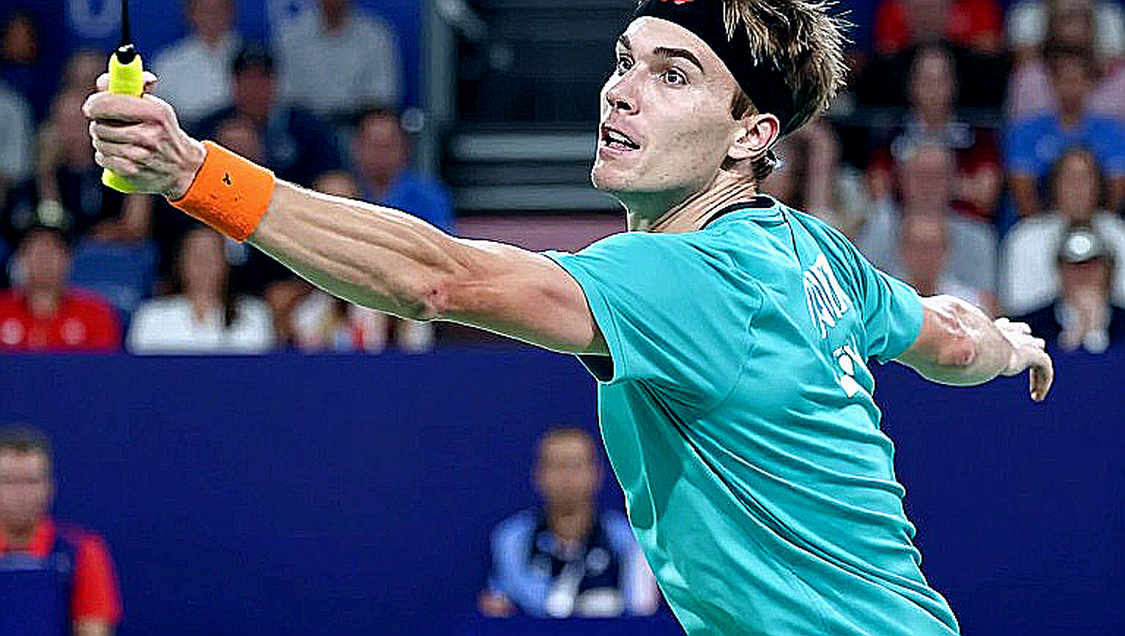
The court at the Indonesia Masters Super 100 was shrouded in thick haze. Ashmita Chaliha, India's top seed at this tournament, had just finished a breathless quarterfinal victory over Goh Jin Wei: 10-21, 21-10, 21-17. She wiped the sweat from her brow, looked around the arena, and asked a question few dare to ask: "Imagine if this tournament was held in India, would people stay silent?"
That question is not just the complaint of a tired athlete. It is a strategic attack on the tournament hierarchy system of the Badminton World Federation (BWF), where organizational standards are measured by tournament ranking rather than player safety.
Consider the context. Just months earlier, India hosted the World Championships in New Delhi for the first time in 17 years. The event received praise from the BWF President himself. Chaliha, in a social media post, credited the Sports Authority of India (SAI) and the Badminton Association of India (BAI) for organizing a world-class event. But in Indonesia, she had to compete in conditions she described as "hazy, smog-like."
This contrast is not coincidental. It exposes a systemic asymmetry in how BWF oversees its tournaments. When the India Open (Super 750) was criticized for poor air quality, cold, and hygiene, players like Mia Blichfeldt spoke out publicly. Anders Antonsen even withdrew and accepted a fine over pollution concerns. But when a Super 100 event in Indonesia has similar conditions, the dissenting voices are barely noticed.
This is the tactical blind spot of the system: lower-tier tournaments have smaller budgets, less media scrutiny, and therefore, organizational standards can be easily overlooked. But the athletes competing there are still human, still breathing that air, still running on that court.
Look at Chaliha's match data at this tournament. In the Round of 32, she beat Pornpicha Choeikeewong 21-17, 23-21. The tight scoreline, especially the 23-21 second game, shows she won through clutch-point execution rather than overwhelming superiority. In the pre-quarterfinal, she lost 10-21 to Goh Jin Wei, then won 21-10 and 21-17. The extreme score swings between games reflect a reality: Goh Jin Wei, a former junior world champion who has battled heart-related health issues, may have faded physically in the third game. Chaliha's victory is real, but it does not demonstrate tactical dominance.
This leads to an important question: does a win at a Super 100 event truly have predictive value for bigger tournaments? The answer is no. Super 100 is the lowest tier of the five BWF World Tour levels, with the lowest prize money and ranking points. Top-20 players rarely compete. Chaliha, at 26, is in her competitive prime, but she still needs results at Super 300 or Super 500 events to prove genuine upward movement.
However, what makes Chaliha's story notable is not her on-court victory, but how she uses her credibility to question governance. She is not just an athlete; she is becoming an advocate for player welfare at lower-tier tournaments. Her voice, reinforced by a positive experience at the World Championships at home, carries a weight that ordinary complaints do not.
The asymmetry in scrutiny is real. When Indian tournaments were criticized, BWF and international players spoke up. But when an Indonesian tournament faces similar issues, the silence is almost total. This raises the question: does BWF apply consistent venue-standards enforcement across all member associations, or do political and commercial considerations create a double standard?
The answer, based on available evidence, is that there is inconsistency. The Antonsen case—withdrawing from the India Open and accepting a fine—suggests BWF's mandatory-participation rules do not have a clear "unsafe conditions" exemption, or if they do, the burden of proof falls on the player. This creates a disincentive for players to publicly complain about conditions, making Chaliha's statement even more notable.
The biggest risk here is reputational, not just for BWF but for Indonesia as a host nation. If the "double standard" narrative gains traction, BWF could face questions about why Indian venues are scrutinized while Indonesian venues are not. This could lead to demands for uniform air-quality standards across all tournaments.
But there is another, more counterintuitive perspective. Perhaps Chaliha's statement is not simply about air quality. It is about using India's success as leverage to demand fairness. When a country once criticized for poor tournament conditions successfully hosts a major event, it gains the credibility to question the standards of other nations. This is a strategically smart move, turning a positive home experience into a weapon to fight for change elsewhere.
The playing field is uneven, but the shuttlecock is still round and still flies. Chaliha has won two matches at this tournament, but her question about playing conditions may have a greater impact than any on-court victory. When an athlete at the Super 100 level dares to speak up, she is not just fighting for herself, but for all those who will compete at lower-tier tournaments in the future.
Tactics may lose on the board, but dignity lost is losing the whole match. BWF may choose to ignore Chaliha's question, but that will not make the problem disappear. Change is happening, bit by bit, voice by voice. And the question for BWF is: are they willing to listen before an athlete pays the price with their health?
Cầu thủ liên quan
Bài đề xuất
China Masters 2026: Srikanth's Resurgence, Satwik-Chirag's Dominance, and Lessons from a Shifting Generation2026-09-04
Indian Badminton Contingent at China Masters 2026: Srikanth Resurges, Satwik-Chirag Hold Firm2026-09-04
Ashmita Chaliha and the Double Standard Question at BWF: When the Court Is Hazy2026-09-03
Indian Badminton Team Explodes at China Masters 2026: Srikanth, Satwik-Chirag and Tanvi Sharma Reach Quarterfinals2026-09-04
Srikanth's Resurrection at 33: A Lesson in Patience from the China Masters 20262026-09-04
Bài đề xuất
India Shines at China Masters 2026: Srikanth's Comeback, Satwik-Chirag's Thrilling Escape2026-09-04
China Masters 2026: Srikanth's Resurgence, Satwik-Chirag's Dominance, and Lessons from a Shifting Generation2026-09-04
Srikanth Returns with Decisive Win at China Masters 2026: Forgotten Triumph2026-09-04
Indian Badminton Contingent at China Masters 2026: Srikanth Resurges, Satwik-Chirag Hold Firm2026-09-04